
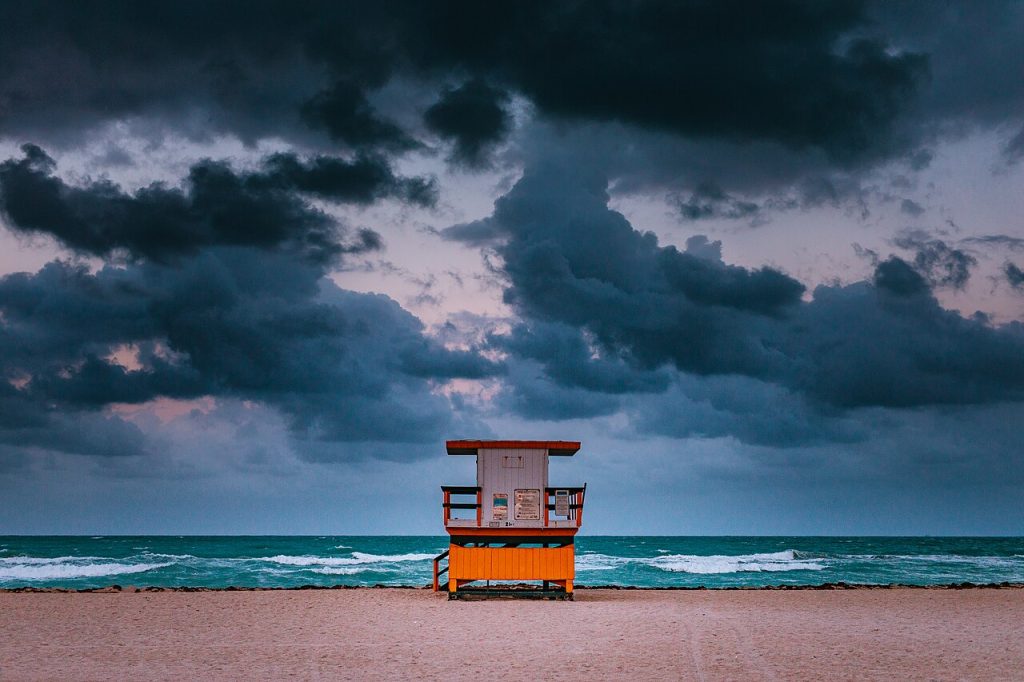
What to Do If a Hurricane Threatens Your Beach Trip
Key points
- The Atlantic hurricane season runs June 1 through November 30, with peak activity around September 10 and the highest-risk stretch from mid-August to early October.
- NOAA predicted a below-normal 2026 Atlantic season with 8 to 14 named storms, but forecasters remind travelers it only takes one storm to upend a trip.
- The National Weather Service issues hurricane warnings up to 48 hours in advance, so a warning at your destination is the time to act, not to keep watching.
- Refund rules vary by airline, hotel and fare type, so check cancellation terms and insurance coverage before you book and keep records of every change.
- Southern Caribbean islands such as Barbados and Trinidad and Tobago are rarely affected, while storm tracks more often cross the northern Caribbean toward Florida.
Hurricane season overlaps with some of the cheapest, quietest months at the beach, and plenty of travelers go without trouble. The risk is real, though, and the travelers who fare best are the ones who know what to watch and when to act. Here is a step-by-step path from booking through the final days before departure, plus what to do if a storm catches you already in beach mode.
Know the season and where storms hit
The Atlantic hurricane season runs from June 1 through November 30, and that covers the Caribbean, the Gulf and the US Atlantic coast, since the Caribbean sits inside the Atlantic basin. Storms can form outside those dates, but most activity falls in that window, peaking from late August into September. The statistical midpoint of the season is around September 10, and the stretch of highest concern runs from mid-August to early October.
Geography matters as much as the calendar. Storm tracks most often sweep across the northern Caribbean, over Cuba and toward the Bahamas and Florida. Islands in the far southern Caribbean, such as Barbados and Trinidad and Tobago, are rarely affected. The region covers roughly a million square miles of sea, so even when a hurricane hits one area, much of the region can have ordinary tropical weather. If you are still picking an island, our guide to choosing an island getaway covers how destinations differ before you commit.
The National Hurricane Center also publishes tropical weather outlooks for the eastern and central Pacific, which cover Mexico’s Pacific coast and Hawaii. The same watching-and-deciding approach applies there.
Watch the forecasts before you leave
Start checking about a week out. The National Hurricane Center publishes Tropical Weather Outlooks covering the next 48 hours and the next 7 days, and each disturbance carries a formation chance for both windows. A broad area of low pressure with a low chance of development through 48 hours tells you something very different from a named storm with a forecast cone aimed at your hotel.
As a storm gets closer, the NHC adds products worth understanding: the track forecast cone, wind speed probabilities, time-of-arrival graphics and storm surge watches and warnings. The National Weather Service issues hurricane warnings and updates up to 48 hours in advance, so a trip inside that window means it is time to make decisions, not just monitor.
Seasonal forecasts set the background, not the plan. For 2026, NOAA predicted a below-normal Atlantic season with 8 to 14 named storms and 3 to 6 hurricanes, and Colorado State University forecast a well below-normal season, pointing to a strengthening El Niño. Both repeat the same warning: it only takes one storm to make it a bad season for you. NOAA does not make seasonal landfall predictions, because landfalls depend on weather patterns that usually only become predictable when a storm is days from the coast. If your dates are still fluid, our guide on how far ahead to plan a trip can help you weigh flexibility against price.
When to cancel, change or wait
Three situations, three different plays:
- A disturbance is days away with a low formation chance. Wait and keep checking. Many systems fizzle or turn away, and canceling this early usually costs you money for no reason.
- A storm has formed and the 7-day outlook puts your destination in the possible path. Contact your airline, hotel and any tour operators now. Ask what changes they allow without penalty and what happens if they issue their own weather waiver. Rebooking early usually means better options than rebooking at the last minute.
- A watch or warning is up for your destination, or your travel dates fall inside the next 48 hours. Decide. Fly earlier if you can, move the trip or cancel. Waiting to see what happens is the option that tends to leave travelers stuck.
Travel tip
During hurricane season, book refundable hotel rates and changeable fares when the price difference is small. The flexibility fee is often cheaper than the money you lose on a nonrefundable booking.
One more caution: a quiet seasonal forecast is not permission to ignore the tropics. Years with similar overall activity can produce very different storms, and a below-normal season can still send a hurricane to the exact beach you picked.
Get your money back: hotels, flights and packages
Refund rules vary by hotel, airline, tour operator and fare class, so the first move is to reread the terms you agreed to when you booked. Nonrefundable does not always mean no options: airlines sometimes issue travel waivers when a storm threatens an airport, and hotels may waive cancellation penalties in an affected area, but you usually have to ask.
If you booked a package, start with the tour operator or travel agent rather than calling each supplier separately. They control the booking and often have weather policies that apply to the whole trip.
Travel insurance deserves a close look before the season starts, not after a storm is named. Policies differ in what they cover and when coverage begins, so check the terms for trip cancellation and trip interruption, and ask the insurer directly about hurricane scenarios. Keep records of everything: booking confirmations, cancellation emails, receipts and the names of anyone you speak with. If a claim comes later, that paperwork does the arguing for you.
If you’re already at the destination
Follow local officials and your hotel staff, not the rumor mill at the pool bar. If an evacuation is ordered for your area, go. Storm surge and flooding are among the direct dangers a hurricane brings, and beachfront rooms are exactly where you do not want to be during one.
A few practical moves help. Confirm your flight’s status with the airline before heading to the airport, since airports can close before a storm arrives. Ask the front desk where guests are told to shelter and whether the hotel has water and power plans. Keep your phone charged and limit heavy data use if networks slow down. Once winds pick up, stay inside, and remain there until officials say the storm has passed. The calm eye of a hurricane is not the end of it.
Build a storm-day kit for your hotel room
A few items packed before you need them make a hotel-room storm far easier to sit through:
- A flashlight and spare batteries, plus a charged power bank for your phone
- Bottled water and snacks that need no refrigeration
- Any prescription medications, kept in their original labeled containers; our guide to traveling with prescription medications explains why the labels matter
- Passports, IDs and booking confirmations in a waterproof pouch or dry bag, with digital copies on your phone
- A rain jacket and closed shoes for the hours before and after the storm
- Some cash in small bills, in case card systems are down
Pack it all in one bag you can grab quickly. If the storm passes you by, the water and snacks simply become beach supplies.
If a beach trip is on your calendar between June and November, the next step is simple: bookmark the National Hurricane Center’s Tropical Weather Outlook pages and start checking them about a week before you fly.
Questions travelers ask
When is hurricane season at Caribbean beaches?
June 1 through November 30, since the Caribbean is part of the Atlantic basin. Storms can occasionally form outside those dates, but most activity falls in that window, peaking around September 10.
Is it safe to book a beach trip during hurricane season?
Many travelers go without a problem, especially outside the mid-August to early October stretch of highest concern. Book refundable rates, watch the forecasts in the week before departure and know your change options before you need them.
What happens if a storm hits while I’m already there?
Follow local officials and your hotel’s instructions, including any evacuation order. Confirm your flight status with the airline before going to the airport and stay indoors until officials say the storm has passed.
Do I get a refund if a hurricane cancels my trip?
It depends on the hotel, airline and fare rules, so check your booking terms first. Airlines and hotels sometimes issue weather waivers, and travel insurance may cover cancellation or interruption, but coverage differs by policy.